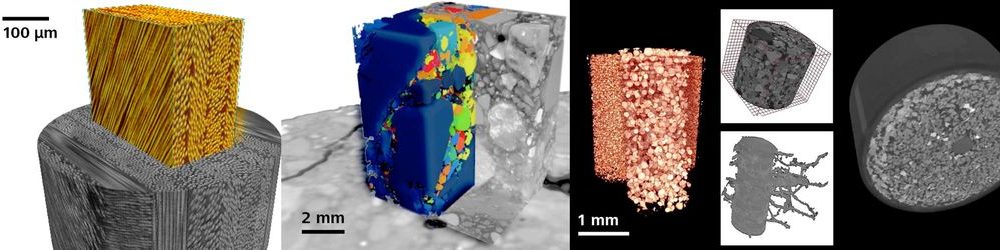
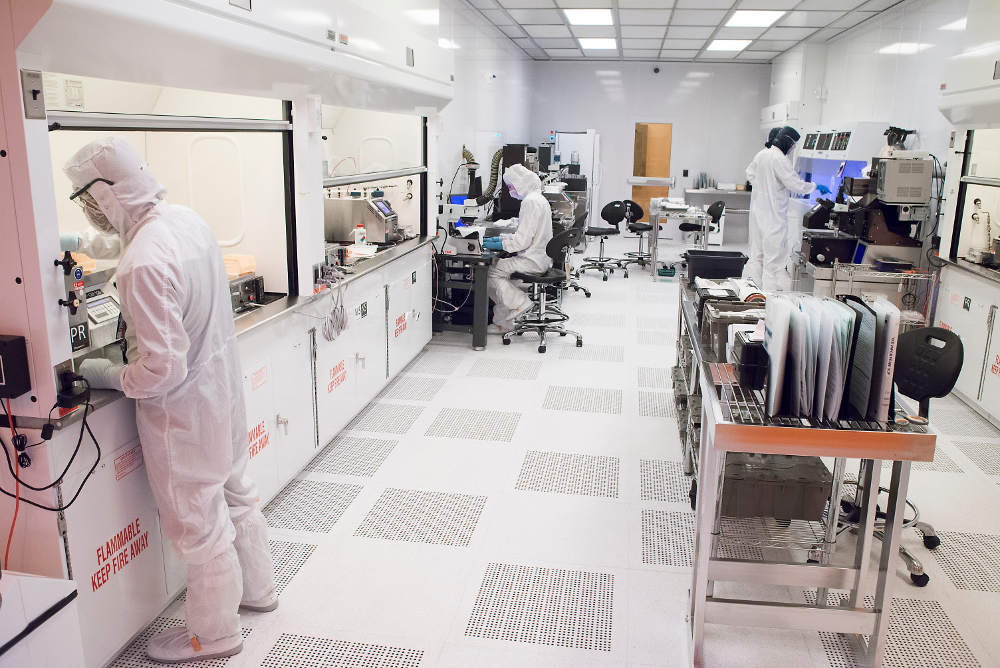

"The Utah Nanofab advances leading edge research, and facilitates economic growth by providing world-class nanofabrication facilities, infrastructure, and staff to academia and industry."
"The Utah Nanofab will become a recognized leader in innovation and a premier nanotechnology center with an interface to biomedical sciences. Through the efforts of the Utah Nanofab, the frontiers of research will be expanded, the next generation of engineers and leaders will be educated, and economic growth will be supported by the sustainable transfer of technology into meaningful commercialization outcomes."
Empowering, Serving and Safeguarding the Nanofab Community
We believe exceptional quality and accessibility reinforce our commitment to serve as a core facility. We support collaboration by building partnerships across academic disciplines, business and industry. We create an environment that is conducive to learning, innovation, and success. We serve as a catalyst for economic development in Utah and beyond. We enable the academic and local industrial community with a strong commitment to excellence in research and innovation.
We seek effective and efficient ways to better serve our lab members. We strive to provide quality tools, technologies, processes, and facilities for learning, understanding, and developing new technology. We anticipate the needs of those we serve and offer proactive and flexible solutions. We are motivated to initiate and adapt to change for improving our work and community.
We instill a discipline of safety throughout our facility and in all aspects of our work. We are committed to providing a safe work environment through training, communication, and quality resources.
We are committed to sustaining credible, reliable, and trusted professional staff. We honor commitments and take pride in our work. Lab members are treated with courtesy, respect, appropriate confidentiality, and dignity. We believe teamwork provides the foundation for continuous improvement to our systems for the benefit of both lab members and employees.
Friday, December 7th, 2012, 2:00 pm
Warnock Engineering Bldg. (WEB) 1230
Reception to follow at 3:00 pm
Abstract: There are two phases in commercialization technologies:
Phase 1: using money to develop technology.
Phase 2: using technology to make money.
While the first phase is reasonably easy, it is dramatically more difficult to execute Phase 2.
Venture Capital Industry developed a model enabling increased probability of success and acceleration of the commercialization cycle. As a gage of this models efficiency, National Bureau of Economic Research credits VC industry with 15% of US innovation, while representing only 3% of R&D funding.
This presentation will overview filters VC firms use in their due diligence process. It will follow up with characterization of emerging opportunities in MEMS industry forecasted to grow from $11.5B and 7.4B units in 2012 to $21.1B and 18.8B units in 2017. Brief introduction to even bigger growth potential to trillion sensors in 2022 will be included. Such growth is forecasted by selected visionary companies. TSensors Roadmap working group is being formed to develop advance visibility of these emerging applications Presentation will conclude with an overview of products developed in selected authors startup.
Bio: Dr. Bryzek cofounded eight Silicon Valley MEMS companies: Sensym (now Honeywell), ICSensors (now Elmos/MSI), NovaSensor (now General Electric), Intelligent MicroSensor Technology (now Maxim), Transparent Networks (now Intel), LVSI (now Atmel), Jyve (now Fairchild Semiconductor), and strategic marketing consulting BN Ventures. Currently Bryzek is VP Development, MEMS and Sensor Solutions, at Fairchild Semiconductor, after acquisition of Jyve Inc. in November 2010,
Bryzek received his MSEE and Ph.D. from Warsaw Technical University, Poland. He completed Executive Management Program at Stanford University. In 1989 he was recognized as Entrepreneur of the Year by Arthur Young. In 1994 he was awarded the Lifetime Achievement Award by Sensors Magazine for the achievements in MEMS field. In 2003 he was awarded a lifetime Achievement Award by MANCEF.
OpenOptogenetics.org is showcasing a research paper by University of Utah faculty Tanya Abaya, Steve Blair, Prashant Tathireddy, Loren Rieth, and Florian Solzbacher.
From the openoptogenetics.org website:
In a recent paper published in Biomedical Optics Express, Abaya, et al. presented a novel device structure that facilitates three-dimensional deep-tissue light penetration with capabilities for simultaneous spatiotemporal modulation with different wavelengths.
You can find the original article at Optics InfoBase.
The University’s Unews site is highlighting some research done by Professor Massood Tabib-Azar. His research group has developed mechanical logic gates that can withstand intense heat and radiation. Read more on the unews post.
See the flyer below for the SEM short course that is going to be offered beginning next week. Please contact Brian Van Devener (bvandev@chem.utah.edu) if you are interested.
A group of students from the University of Utah won a $100,000 prize at the regional CU Cleantech New Venture Challenge on April 20th for their work in commercializing a new method of manufacturing quantum dots. Read more from the KSL news story.
The SMBB Building Dedication and Ribbon Cutting ceremony was held on April 19th. Please check out the promotional video that gives a great overview of the SMBB building and its role in the USTAR initiative.
Local news station, Fox 13 featured a news story about the event. KUTV also stopped by to do their news story about early and accurate detection of diseases.
You will also want to check out the list of media coverage about the event at innovation utah's website.
All tools from the surface lab in MEB have been moved into the Micron Microscopy Core in the Sorenson Molecular Biology Building and are now online and operational. These include:
For more information on a specific tool, please visit the equipment web pages.
The new Sorenson Molecular Biology Building (The USTAR building) was given a temporary occupancy permit on December 12th. We are happy to say that our move is progressing smoothly with the first of our staff members already relocated, and we look forward to moving the Surface Lab into the new Micron Microscopy Core by mid-February, along with the dicing and packaging labs. In order to keep our community of lab members informed on all the changes, we will be posting news updates regularly on our website.
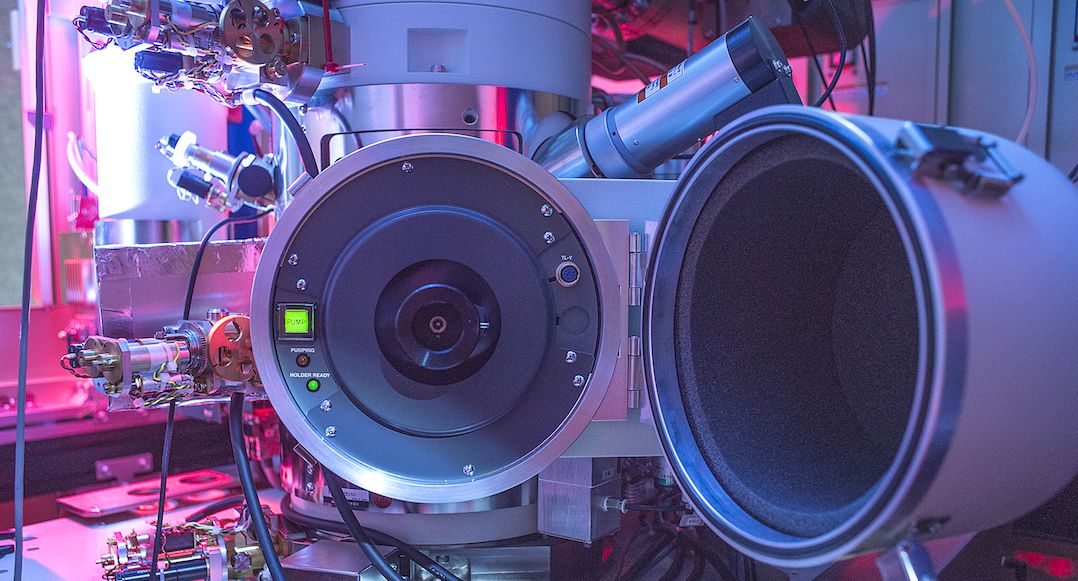
During the same week we received occupancy in SMBB, we installed two brand new instruments in the Micron Microscopy Core, A Hitachi S-4800 UHR SEM (with Oxford EDS), and an FEI Helios 650i dual-beam SEM/FIB (with omniprobe and gas injectors for metal deposition (Au, Pt), and etch (XeF2, H20 (for organics), and iodine).
We are currently in the beginning stage of a transitional period as we move our tools from MEB to SMBB. We will be maintaining both facilities during this period until we are able to move all of our equipment to the new labs. We are moving tools in groups based on priority as moving funds become available, with an eye toward minimizing downtime for any given process, or ensuring that a comparable process is online while another is being moved. You can always view our current plan online. We will continue to keep that page up to date.
The staff office space has largely been completed and half of our staff have already formed an "away team" to manage all the projects and issues related to life in the new building. During the transitional phase of the move, many of our staff will be spending their time split between our two locations. If you need to contact a staff member, please check the staff contact page for up to date phone numbers and other contact information.
The Utah Nanofab is pleased to announce the hiring of Steve Pritchett as a Senior Process Engineer supporting the nanofab transition into the SMBB(USTAR building).
Come talk with Steve when you need assistance in developing or characterizing new processes, as he specializes in dep, etch, and CMP processes. You can find him in 1280 MEB, fab office phone (801) 585-5676 or email spritchett@eng.utah.edu
Steve comes to us with a wealth of electronic packaging, semiconductor device and optical products manufacturing experience. At MOXTEK Steve covered thin film deposition and capacity/fab expansion projects. At Fairchild/National Semiconductor, Steve worked in process development for thin films and for product development their CSP’s (Chip Scale Packages). The CSP work involved bumped contacts, wafer grind and etch for thinning and backmetal. Steve started his career at a small company acquired by National Semiconductor, Comlinear Corp., where he supported hybrid and MCM electronic product fabrication and assembly, based on a ceramic thin film substrate in hermetically sealed packages.
Headquarters Hotel: Salt Lake City Marriott Downtown Hotel
Sponsorship Information:
Richard A. Normann, PhD
normann@utah.edu
Conference Co-Chairs:
Richard A. Normann, Ph.D. and Florian Solzbacher, Ph.D., University of Utah
Registration and other information available at the website.
KCPW featured an interview with Dr. Florian Solzbacher and Michael O’Malley in their city views segment. You can find the broadcast audio on their website. The interview is in the second part of the broadcast.
The University of Utah’s move to the Pac-12 promises exciting times ahead from an athletic perspective. Although less publicized, joining the ranks of some of the world’s most prestigious research universities ushers in even more exciting times for Utah’s economy.
One area of research, in particular, stands out as an unparalleled opportunity. Perhaps the largest impact for the U. may take place on a much, much smaller playing field in the realm of nanotechnology research and development.
Slice a meter-long object a billion times and you have the unit of measurement called the nano. Nanotechnology deals with the manipulation of particles at the atomic and molecular level. This science is affecting everything from medicine and energy to computing and telecommunications. It promises to make the likes of drugs, solar panels, chip manufacturing and wireless components faster, cheaper and more efficient. For example, fiber optic lasers are being studied at the U. to heat up extremely small gold nanorods inside cancer cells. This process consequently burns the cancer cells from the inside out.
Through the leadership of USTAR — the Utah Science Technology and Research initiative — the University of Utah is quickly becoming a national leader in the commercialization of nanotechnology research. The upcoming completion of a major new building on the Utah campus will further position the university for success in the sciences.
With many thanks to FEI Company for the extended evaluation we have enjoyed of the Quanta 3D FEG, we will be saying ‘good-bye’ to that loaner in mid-May, as it has been sold.
We will be replacing the Quanta with a much higher resolution instrument, the Helios, which will be moving to the Micron Microscopy Core labs of the Sorenson Molecular Biotechnology Building (SMBB), in December, 2011 (immediately upon commissioning).
The UHR instrument coming to the U in December is described here:123
A “poster child” is the Utah Neural Array developed in the Utah Microfabrication Core Lab by Richard Normann who effectively established an engineering linkage to a series of medical applications. This effort became commercialized in his Bionic Technologies, Inc. then in Black Rock with the ultimate development of a new, local cleanroom, accompanying jobs and additional University collaborations. There have been multiple human surgeries (motor cortex implant) with the commercial Electrode Assembly, enabling quadriplegic individuals to begin controlling computers and artificial limbs through their volitional thoughts. Further substantial NIH grants have been awarded to Utah PI’s based on development of this and related local know-how. Anticipated outcomes from similar collaborative efforts include new ideas through effective seeded collaborations (facilitated by seminars, open use labs and other interactions); more effective research proposals seeded by user fee sponsorship to obtain preliminary data; superior research enabled by better equipment, instrumentation, & expertise; and more, stronger companies maturing through start-up, based on an industrial preliminary data seed fund and cost-effective access to needed sponsored resources.
The University of Utah Nanofab is one of the exhibitors in this year’s nanoUtah conference. The 2010 installment of the nanoUtah Conference builds on the rich tradition of past events. Anchored by presentations from Utah’s leaders in nanoscience and nanotechnology, the conference is intended to foster collaborations and the exchange of knowledge among scientists, engineers, clinicians, industry leaders, and students. KSL news covered the event in this video.
Friday, December 7th, 2012, 2:00 pm
Warnock Engineering Bldg. (WEB) 1230
Reception to follow at 3:00 pm
Abstract: There are two phases in commercialization technologies:
Phase 1: using money to develop technology.
Phase 2: using technology to make money.
While the first phase is reasonably easy, it is dramatically more difficult to execute Phase 2.
Venture Capital Industry developed a model enabling increased probability of success and acceleration of the commercialization cycle. As a gage of this models efficiency, National Bureau of Economic Research credits VC industry with 15% of US innovation, while representing only 3% of R&D funding.
This presentation will overview filters VC firms use in their due diligence process. It will follow up with characterization of emerging opportunities in MEMS industry forecasted to grow from $11.5B and 7.4B units in 2012 to $21.1B and 18.8B units in 2017. Brief introduction to even bigger growth potential to trillion sensors in 2022 will be included. Such growth is forecasted by selected visionary companies. TSensors Roadmap working group is being formed to develop advance visibility of these emerging applications Presentation will conclude with an overview of products developed in selected authors startup.
Bio: Dr. Bryzek cofounded eight Silicon Valley MEMS companies: Sensym (now Honeywell), ICSensors (now Elmos/MSI), NovaSensor (now General Electric), Intelligent MicroSensor Technology (now Maxim), Transparent Networks (now Intel), LVSI (now Atmel), Jyve (now Fairchild Semiconductor), and strategic marketing consulting BN Ventures. Currently Bryzek is VP Development, MEMS and Sensor Solutions, at Fairchild Semiconductor, after acquisition of Jyve Inc. in November 2010,
Bryzek received his MSEE and Ph.D. from Warsaw Technical University, Poland. He completed Executive Management Program at Stanford University. In 1989 he was recognized as Entrepreneur of the Year by Arthur Young. In 1994 he was awarded the Lifetime Achievement Award by Sensors Magazine for the achievements in MEMS field. In 2003 he was awarded a lifetime Achievement Award by MANCEF.
The 2012 nanoUtah Conference & Exhibition builds on the rich tradition of past events. Anchored by presentations from international and local leaders in nanoscience and nanotechnology, the conference fosters collaborations and the exchange of knowledge among scientists, engineers, clinicians, industry leaders, and students. More Information
Please see the flyer that the MRSEC center is sponsoring next Wednesday, entitled:
LOW-DIMENSIONAL NANOSTRUCTURED OXIDES FOR ENVIRONMENTAL REMEDIATION AND ENERGY CONVERSION by Post-Doctoral Candidate Dr. Hou from the Department of Chemistry at the University of California, Riverside.
The Utah Nanofab will be having its annual safety training meeting at the beginning of the Fall semester. There will be two sessions and attendance to one of the sessions is required for any members who are planning to use the cleanroom. The first session will be held on August 23rd from 11:00am to 12:30pm and the second session will be held on August 24th from 2:00pm to 3:30pm. Both sessions will be held in SMBB 2650.
From the College of Engineering News Site:
The April 2012 dedication of the James L. Sorenson Molecular Biotechnology Building—A USTAR Innovation—centermarks the beginning of a new era of interdisciplinary translational research at the University of Utah. It is the centerpiece of a visionary plan to bridge the U of U main campus and health sciences in order to accelerate research at the interfaces of medicine, engineering, pharmacy, science, business, law and digital media.